


Key Largo Reef and Mutton snapper
Key Largo Mutton Snapper Fishing: The Ultimate Rigging, Bait & Tactics Guide
Key Largo reef and mutton snapper fishing is legendary, but catching trophy mutton snapper fish (Lutjanus analis) over 10 to 20 pounds consistently requires extreme precision.
Mutton snappers possess extraordinary eyesight, feed cautiously along high-relief structure, and will immediately reject unnatural bait presentations or thick, visible leaders.
Whether you are targeting muttons on the shallow patch reefs, drifting the 90-foot reef edge, or working deep wrecks off Key Largo, this guide breaks down the exact rigging, terminal tackle, bait selections, and mutton snapper fishing tactics used by Good Karma Sportfishing to consistently put trophy muttons in the box.
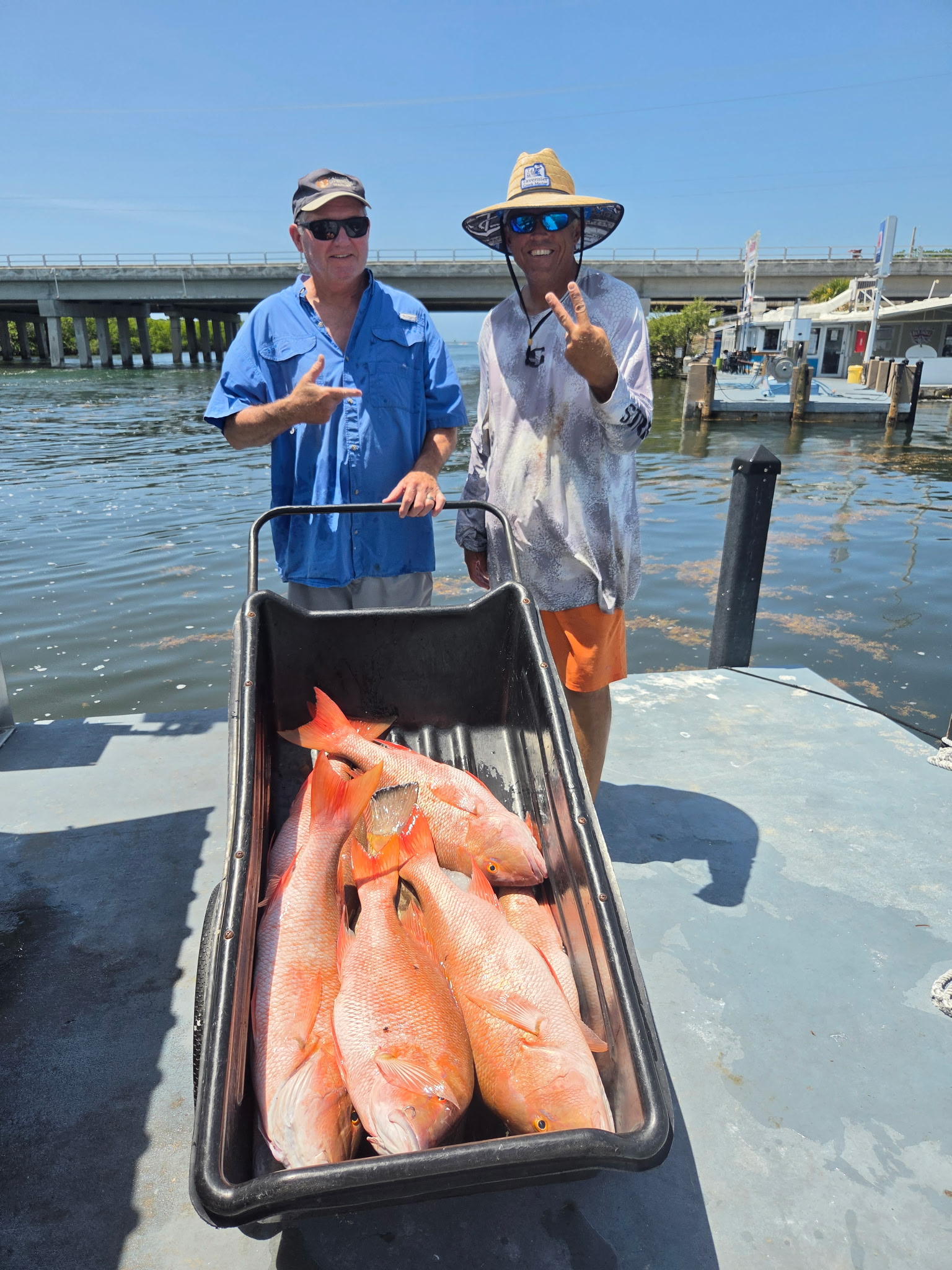
The Best Key Largo Mutton Snapper Fishing Spots
The outer reef line off Key Largo runs from about 25 ft of water out to a hard edge that falls away into the deep.
Most of it sits inside John Pennekamp Coral Reef State Park. Molasses, French, Conch, Davis and Pickles all fish along that same line.
Inside that line sit the patch reefs, in 15 to 30 ft of water. A lot of Key Largo mutton snapper come off those shallow patch reefs, especially on a chum line.
Mutton snapper want two things. Hard coral and rock to swim around, and water that moves. The reef gives them the first. The current gives them the second.
Where the reef edge meets a running tide, water gets pushed and squeezed. Small bait stacks up, and mutton snappers come in to feed on it. Find that setup and you do not need a secret spot.
Fishing Mutton Snapper from Miami? Here Is Why the Run South Pays
The Miami reef and the Key Largo reef are the same reef system. It runs from the Dry Tortugas all the way up past Miami, which is why a Miami angler already knows how to fish it.
What changes when you run south is how much bottom you have to work with.
Off Miami the shelf is narrow.
The reef line and the deep water sit close together, so most of the fishing happens on the edge and in the drop. South of Fowey Rocks the tract widens into the spur-and-groove shelf that made Key Largo famous. You gain shallow hard bottom, and you gain every depth band that comes with it.
That matters most on a slow tide. When the deep edge goes quiet, a wide shelf gives you somewhere to go. Slide in to 20 ft of patch reef with a chum line, or step out to 120 ft on the edge, and the day is not over.
By water, Molasses Reef is roughly 47 nautical miles from Government Cut.
By road, Tavernier Creek Marina is about an hour and a quarter out of Miami. Either way you are fishing a longer piece of reef than the one behind you, and that is the whole reason the run is worth it.
| What you are working | Off Miami | Off Key Largo |
|---|---|---|
| Run to the reef line | Short. The reef sits close to the beach | About 6 miles to Molasses Reef, with the patch reefs inside of it |
| Shape of the tract | Narrow. The reef line and the deep water sit close together | Wide. A shelf of spur-and-groove coral, with the drop beyond it |
| Shallow hard bottom | Less of it, so the edge does most of the work | Plenty from 15 to 45 ft, plus patch reefs in 15 to 30 ft |
| Depth bands open to you in one day | Mostly the edge and the deeper rubble | 15 ft to 130 ft along the same drift line |
| When the tide goes slow | Less to fall back on | Slide in, chum the shallow patch reef, and keep fishing |
| Getting there | A quick run from the inlet | About 47 nautical miles from Government Cut, or an hour and a quarter by road to Tavernier |
Mutton Snapper Fishing-Key West or Key Largo? Two Ends of the Same Reef
Key West gives you less fishing pressure, but more sharks and more travel time to the fishing grounds.
The reef does not stop at Key Largo. It keeps running southwest, past the Marquesas and on to the Dry Tortugas, which is why Key West has mutton fishing too.
Same tract, same mutton snapper fish, two different ways of fishing them.
Key Largo is the wide end. Shallow patch reefs inside, the edge outside, and a depth band that works on almost any tide. Key West is roughly two more hours down the Overseas Highway from here, and it sits closer to the deep water, which is why so much of that fishing happens on the edge, the wrecks and the drop.
The one thing Key Largo cannot hand you is the Tortugas spawn.
The big summer aggregations out there are a short run from Key West and a long haul from here.
If chasing the largest fish of the spawn is the whole point, that is a Key West trip.
For a normal reef day, pick by what your tide gives you.
Key West is the deeper, edge-first reef. Key Largo is the shallow-to-deep reef, and that is what keeps you fishing when the water goes slow.
| What you are working | Off Key West | Off Key Largo |
|---|---|---|
| Where it sits | The west end of the tract, near the Marquesas and the Dry Tortugas | The first good reef you reach coming south from Miami |
| Deep water | Sits close, so the edge, the wrecks and the drop get most of the fishing | A shelf of reef inside, with the edge at 80 to 120 ft and the real drop beyond it |
| Shallow patch reef | Some, but the day is usually not built around it | Plenty in 15 to 30 ft, and it is what carries a slow tide |
| The spawn | A short run to the Tortugas aggregations, where the largest summer mutton gather | Spawn fish show in summer around the full and new moons |
| Getting there from Miami | About two and a half hours by road, or a long run by water | About an hour and a quarter by road to Tavernier Creek |
| Pick it when | You want the deep edge and a shot at a spawn fish | You want every depth band open on one drift line |
Before You Book Anywhere: Ask What the Fuel Costs
You can chase the Miami mutton hype or book an expensive run out of Key West, but trophy mutton come down to smart angling, not boat traffic or a surprise at the dock.
A word on long runs. A standard mutton trip out of Key West is a long way from the dock. When the bite is tricky and the captain has to hunt across several spots, the fuel adds up fast, and plenty of boats hand you the bill at the end of the day rather than before it. Book from any port and ask for the fuel plan up front, with a solid estimate in writing before you step aboard.
Here in Key Largo the day is built on the fishing itself: reading the current, dialing in the bottom, and putting you over trophy mutton snapper without the runaround.
Why the Long Runs West Keep Getting Longer
Charters in the lower Keys are running farther west than they used to. Same fish, same reef line, just more water between the dock and the spot.
There is a fair reason for it. The close reef carries more boats than it did years ago, so a captain who pushes out past the crowd is looking for water that has not been worked all morning. When you are the only boat on the spot, the fishing does feel easier, and some days it honestly is.
Long runs west have a second side that rarely makes the photos: sharks. There are plenty of them out there, and big mutton get eaten on the way up. Every captain who makes those runs knows it, and that is not a knock on anybody. It is simply part of the trip, the same as fuel and weather, and a good captain will tell you straight when you ask about it before you book.
I have had plenty of clients tell me those stories. They run west, they catch fish, they burn fuel, and they lose a share of the catch to sharks. It is a real part of the day, and you deserve to hear about it before you pay for one.
You do not have to run that far. The fish are on the reef here, and the day is won by reading the current and putting the bait in the right depth, not by logging the most miles.
Key Largo Mutton Snapper: The Depth Bands and the Season, Month by Month
Mutton snapper move up and down the reef through the year. Fish one band only and you will catch them part of the time. These are the four we plan around.
| Depth band | What is down there | Why mutton use it | How we fish it |
|---|---|---|---|
| 25 to 45 ft | Patch reef, coral fingers and sand channels | Bait and small fish, with an honest mutton mixed in | Light line and a slow drift over the coral |
| 50 to 75 ft | Outer reef top, coral heads and rubble | The main mutton lane through spring and summer | Live bait, and the least weight you can run |
| 80 to 120 ft | The reef edge and the start of the drop | Bigger fish, and where the spawn fish stage | Chunks and strips, more lead, shorter drifts |
| 130 ft and beyond | Deep rubble, ledges and rock | Winter and early spring fish, often the largest | A slow presentation and a lot of patience |
Key Largo Mutton Snapper and Seasonal Breakdown
Mutton snapper spawn off the Keys in the warm months, mostly around the full and new moons from late spring into summer.
The big fish show up in numbers then, and they show shallow.
The rest of the year they are still there. They are just spread out, and you have to work for them.
Fall is its own season. From October into December, a lot of boats find them shallow, in 15 to 30 ft on the patch reefs, on a chum line and a live bait.
The deep edge still works on the same days. Try both and let the mutton snapper tell you which one is right.
| Time of year | Where they hold | What they want |
|---|---|---|
| January to February | Deep reef and beyond 100 ft | Sardines and a slow bait in cold water |
| March to April | 70 to 100 ft along the edge | Warming water, and fish starting to move up |
| May to June | 50 to 90 ft, near the full and new moons | Spawning fish, live bait, and a lot of boat traffic |
| July to September | 50 to 80 ft on the current edges | The summer spawn, and chum to bring them up |
| October to December | 15 to 30 ft on the patch reefs, and the deep edge | A chum line with live bait shallow, or a chunk on the edge |
What is the Best Current for Mutton Snapper
On this reef, the tide decides more than the bait does.
Ask any Keys captain about the best tide for mutton snapper and you get the same answer: moving water with a clean edge on it. Mutton snapper feed when the water runs and the bait stacks up. Slack water is the slow part of the day.
We plan the trip around the last two hours of the run and the first hour of the change. Slack water is for rigging, eating and repositioning over better bottom.
| Tide stage | What the water does | Where the fish sit | What we do |
|---|---|---|---|
| Slack water | Barely moving | Spread out and picky | Rig up, eat, and move to a new piece of bottom |
| First of the run | Starts to push | Begin to look up | Get the baits in the strike zone and stay put |
| Strong run | Clean moving water with a visible edge | Feeding hard on the seam | Fish the edge and keep the drift straight |
| Last of the run | Eases and goes soft | Push back down and slow down | Make the most of it, then plan the next change |
Best Baits for Florida Keys Mutton Snapper
Keep the rig simple. A length of fluorocarbon, a sharp hook, the least weight that will still hold bottom, and a bait that looks alive.
That is the mutton snapper rig we tie, whatever the depth.
The weight is where most anglers get it wrong.
Too much lead parks the bait and kills the drift. Too little and the bait never gets down to the fish. Match the weight to the day, then leave it alone.
The best bait for mutton snapper is a live one: a pinfish or a pilchard on a circle hook. Live ballyhoo works, and so does a chunk of bonito on the deep edge.
On the shallow patch reefs, a live bait drifted back down a chum line is hard to beat.
| Rig | When we use it | Leader and hook | Weight | Bait |
|---|---|---|---|---|
| Live bait on light lead | Most of the year, fishing the drift | 30 to 40 lb fluorocarbon, 4/0 to 5/0 circle hook | The least lead that still holds bottom | Pinfish, pilchard or a live ballyhoo |
| Chunk or strip | The deep edge, with more current | 40 to 50 lb fluorocarbon, 5/0 to 6/0 circle hook | 2 to 6 oz, matched to the push | Bonito, ballyhoo or sardine |
| Jig with a strip | When the fish are up and feeding | 40 lb fluorocarbon to a short leader | 1 to 2 oz jig head | Plastic tail plus a strip |
| Chum and bait back | The summer spawn, when they come up | Light leader and a small hook | Small lead, or none at all | A bait drifted back in the slick |
Leader Length and Leader Choice
A 50 foot leader or longer is what we recommend when you are targeting snapper or grouper off the boat. Mutton snapper are cautious fish, and in clear, shallow water a 30 lb fluorocarbon leader is what buys you bites.
When the current is strong, or you are fishing tight to structure, you can get away with a shorter leader. Shorter is easier to control and snags the coral less. That is the trade you are making.
Our leaders are wind on, anywhere from 10 to 100 feet. We run Seaworx fluorocarbon in 30, 40, 50 and 60 lb because of the abrasion resistance, and because it does not spin up after a couple of big fish the way monofilament does. Before every trip we measure every leader with a Rapala line counter, so nobody is guessing where the leader ends at the boat.
Why We Built the Mutton Crusher Rig
Long leaders are a pain, but they are part of every serious angler’s life. The longer the leader, the more of a wrestling match it becomes, and in a running tide it gets worse.
Years ago we started working on a long leader system with a removable weight. It was built for drifting live baits deep for wahoo, kingfish, mutton snappers and black groupers.
What came out of it is a bridle that carries the weight for you. It is easy to work, it saves you money on lost rigs, and it does not change the way a fish eats the bait.
The Mutton Crusher Rig
The bridle goes between your main line and your leader. Because the weight rides on the bridle and not above the leader, you fight the fish all the way to the rod tip. That is the whole reason the rig works.
How it is built:
- A bridle tied in line, between the main line and the leader
- 500 lb Jerry Brown hollow core braid
- Spro power swivels at each end, one for the main line and one for the leader
- 24 inches overall, handmade in the USA
Hollow core bridles are much easier on your reels and your guides than cable bridles. The same idea makes the rig right for bottom fishing and for a planer rig offshore.
Rule of thumb: the bridle carries the weight. Take the weight off the clip when the fish eats, and you are fighting it on the leader alone.
One Time Purchase
Capt. Ryan’s Mutton Crusher Rigs - Refined, Advanced & Proven
NEW! 15-YEAR ANNIVERSARY MUTTON SNAPPER RIG COURSE
For 15 years, I have been refining the way I fish for mutton snapper off The Florida Keys.
The brand new masterclass includes the full rig breakdown, the one-time-only leader-building video, the removable clip system, and the rig-switching decision guide. The leader-building video will not be re-recorded. It is part of this course for this release only.
What this course is not: It is not a knot-tying encyclopedia. It is not a gear catalog. It is not a compilation of every rig ever invented for mutton snapper.
It is the system I use, the way I use it, and the reasoning behind it, built over 15 years.
What’s Inside?
The course is built around four things: the rigs, the leader-building video (one time only), the removable clip system, and the decision-making on when to switch rigs based on conditions.
Even if you have the initial course or other rig courses, you will definitely want this update.
- The Current Rigs: The exact rigs I am running right now, not the rigs I used 10 years ago. These are the setups that have survived 15 years of testing and are still in my rotation today.
- Leader Building (One Time Only): The full leader-building video, knots, connections, spacing, and the reasoning behind every choice. This is the only time I will film this. It stays in the course, but it will not be re-recorded.
- The Removable Clip System: The basics of using the removable clip, when it helps, when it hurts, and why I use it the way I do. This is the one piece most anglers get wrong.
- Rig Switching by Condition: When and why I switch rigs based on current, depth, bait, and reef structure. The decision-making is the real skill, the rig is just the tool.
Who This Course Is For
- Beginners: If you are just starting out with mutton snapper, this gives you a system that works, not a pile of random rigs to sort through. You start with the right rigs and the right habits.
- Anglers Who Want to Understand Why: If you have fished muttons for a while but you are not sure why one rig works on one day and fails on the next, this course explains the reasoning behind every choice.
- The Curious: If you have curiosity about why I fish the way I do, the clip, the leader, the rig switches, this is where I discuss all of it.
PS: No Boat? No Problem.
Every person who buys the course receives a 30% discount off a fully rigged Anchors Away Boat Rental located at Tavernier Creek Marina. You do not need to own a boat to put these rigs to work. Show up, rig up, and go fish. Date restrictions apply.
Rule of thumb: if you can feel the lead ticking the bottom, you are about right. If it never touches, add a little. If it never leaves, take some off.
Read Complex Currents for Mutton Snappers-8 Week Intensive Course + Bonus QA
Master Targeted Mutton Snapper, Read Complex Currents, and Stop Wasting Gas on Dead Water.
You will not find anything like this course on YouTube, nor the explanations you are looking for when it comes to currents. It is not what you think it is. Learn how to tie it all together here.
Between relentless fishing pressure, thick sargassum mats, cold-water upwellings, and unpredictable currents, the standard tactics just aren't cutting it anymore.
I spent the summer building something special for those that enroll in this course, and I am very excited to share it.
If you aren't reading the water before you leave the dock, and adjusting your presentation, boat positioning, and lead weight to the exact current shift in real time, you're missing fish.
- Read Current for Mutton Snappers: Learn how to check the current and predict what it will do next.
- Stop Blaming the Fish: When you think the mutton snappers aren't biting, nine times out of ten you're just using the wrong setup for the current. I teach you my playbook.
- Mutton Snapper Fishing Spots: Get an entire lesson focused on finding top mutton spots and knowing where they move as the seasons change.
- A SatFish Bonus Lesson for Mutton Snappers
This 8 Week Intensive Course + Bonus QA gives you the exact playbook, starting right from the intro with dedicated SatFish planning lessons to target muttons before you even throw the throttles down.
Here Is What the Anglers Who Enrolled Have Said
- “Game-changer for drift fishing.”
- “Learning the sinker walking technique opened my eyes.”
- “Dialed in my rigs and current management.”
- “Finally understand how to keep long leaders tight to the bottom and adjust rigs to handle tough currents.”
- “From zero experience to complete confidence.”
- “I had never targeted mutton snapper before. The breakdown on structure and cold-water upwelling was fascinating and made locating them straightforward.”
Good Karma Sportfishing-Your Vault · Membership
Your Vault, Your Ground, Your Patterns, Your Command
Your Vault is the ultimate database for those who like to target snappers, groupers, wahoo and more.
It is not an app and it is not a video library. It is Your Vault.
Members of the Your Vault program get access to the Key Largo, Marathon and Gulf side mutton snapper spot database. We have two more spots open.
What's Inside Your Vault
- Custom Trip Planning & Bait Insider Intel: No cookie-cutter fishing and bait catching forecasts. We build dynamic run plans tailored to your fishing region, running range, and target species.
- Weather for Fishing Your Area (Be Your Own Cross-Reference): Master local wind-versus-tide collisions, sea-breeze timing, and barometric shifts so you can cross-reference forecasts against reality.
- Spot Finding and More: We work together to evaluate the contours, relief, and bottom structure across your specific area, giving you access to a dedicated database of fishing and bait spots.
- Interactive Bottom-Fishing Tools.
- Location-Based Filtering: Dynamic tools calibrated to your home coordinates to evaluate run-times, depth zones, and holding conditions.
- Drift & Approach Modeling: Interactive calculations to determine wind-versus-current displacement, ensuring you nail your approach angle and boat position on the very first drop.
What's Included in Your Access
- Private 1:1 Location Calibration & Onboarding: A dedicated strategy session where we review your home radius, examine your local charts, and begin mapping out the high-potential zones tailored to your boat and style of fishing.
- Quarterly 1:1 Reviews: We audit your logs, evaluate new local ground, and set your seasonal game plan. Time of year breakdowns on shifting conditions and where the migrations are heading.
- If there is information, insight, or resources you would like to see added for your area and the way you fish, we will discuss it.
Your Private Vault Membership: $799.99 / Year Paid in full. An evolving tactical asset engineered to eliminate dead running hours and empty drifts.
Only two spots left. When they are filled, there will be a waitlist.
Policy Notice: Strictly non-refundable. All access commitments are final.
Mutton Snapper Size Limit and Bag Limit
Mutton snapper are managed with a minimum size and a daily bag limit that sits inside the snapper aggregate. Those numbers change, and they change by water and by year. Check the current rules before you keep a fish, and keep that page handy on the boat. Every mutton we box gets measured first.
The ride out
What the Seakeeper 2 Does to a Day on the Reef
Mutton fishing on the Key Largo reef is mostly a drift and a hold. You are not running far. You are staying over one piece of bottom, with a bait in the strike zone. That is exactly where a rolling boat hurts most.
The Seakeeper 2 is a gyro. Inside a sealed box it spins a heavy flywheel up to around 9,700 rpm. When the boat starts to roll one way, the spinning flywheel pushes back the other way and cancels most of that roll. The maker rates these gyros at taking out up to about 95 percent of the roll.
Two things make it a good fit for reef fishing. It lives inside the boat, so there is nothing hanging in the water to add drag or cost you speed. And it works while the boat is standing still, which trim tabs and hull shape cannot do. That is the whole difference between a gyro-stabilized charter boat and a bare one on the same drift.
What It Feels Like on the Water
You stand up to fish. On a sloppy afternoon the deck stops throwing you at the gunwale, so you can work a bait standing instead of braced.
The baits track straighter. Less roll means less swing on the lines, so the spread stays where you put it. Fewer tangles, because rocking is what wraps a flat line around a long line.
Guests stay in the game. The ones who normally go quiet and green on a reef drift keep fishing, keep eating, and keep their feet under them.
The ride home is the part that used to hurt. Eight hours on the reef, then an hour of chop, is a lot easier with the roll gone.
One small thing to know: it takes a while to spin up, so we start it before we leave the dock.
What It Does Not Do
It takes the roll out, not the pitch. Taking a head sea on the way home is still a head sea, and it still draws real power to run. On a flat calm morning you barely notice it is there. On a sloppy afternoon you notice nothing else.
Fish with us
Come Feel the Difference
Good Karma Sportfishing runs out of Tavernier Creek Marina, minutes from the Key Largo reef. Reef trips, mutton trips and offshore days, all of them on the same boat.
If roll is the reason you have not booked a reef trip, that is the reason to book one now.
Good Karma Sportfishing · Tavernier Creek Marina, Tavernier FL
The Reality of Key Largo Mutton Snapper Fishing: Why Skill Trumps Luck
On the boat, I make it look routine. In reality, consistently boating trophy muttons is one of the toughest games on the water.
You don't just wait for the right conditions—you engineer them. You read the current, position the boat on the sweet spot of the structure, and get the presentation down cleanly.
Dial in the fundamentals, and all you need next is patience. Miss them, and no lure or fishing app in the world will buy you a bite.
Thank you for reading, and remember anytime your fishing its all good.
Capt. Ryan
The whole archive lives on the Good Karma Sportfishing blog: captain-written posts on current, temperature, bottom and how the fish move through the year.
100 Mutton Snapper Facts, Straight from the Research
Everything below comes from published studies, government stock assessments and the fishery literature, not from dock talk. The bracketed code after each fact points to the source list underneath, so you can check any line yourself.
Mutton Snapper Scientific Name, Classification & Regional Nicknames
Mutton Snapper Habitat: Range, Depths & Water Temperatures
Anatomy & Identification: How to Read a Mutton Snapper
How Big Do Mutton Snappers Get? Size, Growth Rate & Lifespan
When Do Mutton Snappers Spawn? Migration Patterns & Seasonal Spawning Moons
How Mutton Snappers Feed: Day vs. Night Behavior, Winnowing & Diet Breakdown
Florida Mutton Snapper Regulations: Size Limits, Bag Limits & Seasons
Mutton Snapper Scientific References & Fisheries Research Sources
The papers, assessments and reference works behind the 100 Mutton Snapper facts above. Read them before you argue with anybody about mutton snapper.
- [R1] FishBase species account, Lutjanus analis (Froese & Pauly, eds.). https://www.fishbase.se/summary/lutjanus-analis.html
- [R2] Cummings, N.J. (2007). Important aspects of the life history of mutton snapper, Lutjanus analis, with emphasis on populations in the Caribbean. SEDAR14 DW-02, NOAA Southeast Fisheries Science Center. https://sedarweb.org/documents/s14dw02-important-aspects-of-the-life-history-of-mutton-snapper-lutjanus-analis-with-emphasis-on-populations-in-the-caribbean/
- [R3] Burton, M.L. (2002). Age, growth and mortality of mutton snapper, Lutjanus analis, from the east coast of Florida. Fisheries Research 59: 31-41. https://ui.adsabs.harvard.edu/abs/2002FishR..59...31B/abstract
- [R4] Feeley, M.W., Morley, D., Acosta, A., Barbera, P., Hunt, J., Switzer, T. & Burton, M. (2018). Spawning migration movements of Mutton Snapper in Tortugas, Florida. Fisheries Research 204: 209-223. https://repository.library.noaa.gov/view/noaa/62684/noaa_62684_DS1.pdf
- [R5] SEDAR 79 (2025). Southeastern U.S. Mutton Snapper stock assessment, review presentation, FWRI Stock Assessment Group. https://gulf-council-media.s3.amazonaws.com/uploads/2025/04/08a-SEDAR-79-for-RFAP-March-2025.pdf
- [R6] O’Hop, J., Muller, R. & Addis, D.T. (2015). Stock Assessment of Mutton Snapper of the US South Atlantic and Gulf of Mexico through 2013 (SEDAR 15A update), FWC report IHR-2014-005. https://sedarweb.org/assessments/sedar-15a/
- [R7] Escalante-Domínguez, A.M., Renán, X., Galindo-Cortes, G., Colás-Marrufo, T. & Brulé, T. (2026). Age-based life history of Lutjanus analis from the southern Gulf of Mexico. Fisheries Research 293: 107646. https://doi.org/10.1016/j.fishres.2025.107646
- [R8] SCRFA, Science and Conservation of Reef Fish Aggregations. Mutton snapper species page, spawning aggregation science. https://www.scrfa.org/aggregations/aggregating-species/mutton-snapper/
- [R9] NOAA Fisheries bulletin, seasonal closure of the Mutton Snapper Spawning Aggregation Area in federal waters off St. Croix, U.S. Virgin Islands. https://www.fisheries.noaa.gov/bulletin/reminder-seasonal-closure-mutton-snapper-spawning-aggregation-area-federal-waters-st-0
- [R10] Carson, E.W., Saillant, E.A., Renshaw, M.A., Cummings, N.J. & Gold, J.R. (2011). Population structure, long-term connectivity, and effective size of mutton snapper in the Caribbean Sea and Florida Keys. Fishery Bulletin 109(4): 416. https://spo.nmfs.noaa.gov/sites/default/files/pdf-content/2011/1094/1094carson.pdf
- [R11] Home range characteristics and diel patterns in space use of mutton snapper (Lutjanus analis) in St. Thomas, U.S. Virgin Islands. Animal Biotelemetry (2021). https://link.springer.com/article/10.1186/s40317-021-00237-z
- [R12] Florida Museum of Natural History, Discover Fishes. Mutton snapper species profile. https://www.floridamuseum.ufl.edu/discover-fish/species-profiles/mutton-snapper/
- [R13] Florida Fish and Wildlife Conservation Commission. Snappers recreational regulations. https://myfwc.com/fishing/saltwater/recreational/snappers/
- [R14] Lindeman, K. et al. (2016, errata 2019). Lutjanus analis. The IUCN Red List of Threatened Species. https://www.iucnredlist.org/species/12416/161245983
- [R15] Florida saltwater fishing records list: mutton snapper, Richard Casey, 30.25 lb, 29 November 1998, Dry Tortugas. https://catchafloridamemory.com/programs/records/
- [R16] SEDAR 79 DW-03: Size and age information for Mutton Snapper collected in association with fishery-dependent monitoring along Florida’s coast. https://sedarweb.org/documents/sedar-79-dw-03-size-and-age-information-for-mutton-snapper-lutjanus-analis-collected-in-association-with-fishery-dependent-monitoring-along-floridas-coast/
- [R17] National Park Service, Dry Tortugas. Research Natural Area five year update, on increased mutton snapper spawning events at Riley’s Hump. https://www.nps.gov/drto/learn/news/rna5years072312.htm